Artificial Intelligence
AI-native systems that move beyond generating answers toward owning and executing high-value workflows—especially where reliability, auditability, and human judgment remain essential.
Investments
I partner with exceptional founders pursuing consequential ideas— often before the opportunity becomes obvious.

Philosophy
Conviction before consensus
Investing, at its best, is an act of disciplined curiosity. It begins with questions: Why now? What has changed? What does this founder understand that others have missed? The work is to look beyond the prevailing narrative and develop an independent point of view grounded in people, markets, and evidence.
I underwrite more than a market size or a product demonstration. I look at the relationship among market structure, technological change, distribution, execution risk, management capability, and the conditions required for an advantage to compound over time.
Data and technology can sharpen that work, but they should not replace judgment. The objective is not to eliminate uncertainty; it is to understand uncertainty well enough to act with conviction while remaining intellectually honest about what could prove the thesis wrong.
Areas of inquiry
These are not rigid boundaries. They are evolving fields where I have developed experience, conviction, and a desire to keep learning.
AI-native systems that move beyond generating answers toward owning and executing high-value workflows—especially where reliability, auditability, and human judgment remain essential.
Science-driven companies improving access, precision, and outcomes—especially where technology can make care more human as well as more effective.
Defensible breakthroughs built on hard-won insight, technical depth, and the potential to reshape consequential markets over a long horizon.
Foundational products that replace fragmented work with intelligent systems of action, creating durable value through workflow ownership, trusted data, and deeply embedded distribution.
Ideas at the edge of today’s categories—where shifts in science, culture, and technology reveal markets that are not yet obvious.
How I evaluate
From interest to conviction
Conviction is not certainty. It is a carefully earned willingness to act before the evidence feels complete—supported by a clear view of what is known, what is assumed, and what must be learned next.
Is the problem urgent, consequential, and expensive enough to change behavior—or merely interesting enough to attract attention?
Does the founder understand something specific that others have overlooked, and was that understanding earned through unusual proximity to the problem?
What changed in technology, regulation, cost, infrastructure, or human behavior to make this possible now rather than five years ago?
As the company grows, do data, distribution, trust, network effects, or operational learning make the product meaningfully harder to displace?
What must be true for the thesis to work, what evidence would invalidate it, and can the most consequential risks be recognized before capital obscures them?
If the company succeeds beyond expectation, can quality, reliability, governance, and customer trust scale with it?
Investment lifecycle
From thesis to enduring value
Strong investing connects every stage of the work. The original thesis should inform diligence and structure, then remain useful through execution, governance, and the eventual realization of value.
Frame the strategic question, the market shift, and the specific insight that makes the opportunity worth pursuing.
Separate evidence from narrative across the market, product, team, economics, competition, and downside.
Align ownership, incentives, governance, and capital with the realities of the company’s path—not an abstract template.
Support the decisions that turn possibility into progress: positioning, talent, partnerships, financing, and scale.
Recognize when strategic value has compounded, how it can endure, and which path best serves the company’s next chapter.
What I look for
People before patterns
Markets matter. Timing matters. But companies are ultimately built by people. I look for founders whose insight is earned, whose ambition is grounded, and whose character strengthens under pressure.
A precise understanding of the problem—and a point of view the market has not fully recognized.
The stamina to absorb difficult information, adapt without losing conviction, and continue when progress is nonlinear.
An uncommon ability to learn, decide, and translate insight into meaningful movement.
The judgment to build trust over time with customers, teams, partners, and the people whose lives the company may touch.
Stage and posture
The work changes as the company grows
Stage is more than a financing label. It changes what matters most, which risks deserve attention, and how an investor can contribute without becoming noise. The constant is long-term alignment; the posture should evolve with the company.
Formation
At the earliest stage, the work is to understand the founder’s earned insight, the urgency of the problem, and the smallest proof that could turn an unconventional idea into a credible company.
Thesis clarity · Product truth · First distribution
Scale
As demand emerges, the questions change. Repeatability, leadership, capital efficiency, culture, and governance determine whether early energy can become a durable operating advantage.
Organization · Go-to-market · Capital strategy
Strategic transition
At moments of partnership, acquisition, or category expansion, the task is to preserve the company’s essential advantage while creating the structure, alignment, and integration required for its next chapter.
Partnerships · M&A · Integration and value realization
Founder partnership
Beyond capital
My aim is to be the kind of partner I would want beside me: curious, direct, steady, and generous with time. That can mean pressure-testing strategy, helping navigate partnerships and capital, connecting the right people, or simply listening when the path ahead is unclear.
The relationship is built for the long term. Founders deserve investors who understand that progress is rarely linear—and who remain thoughtful and constructive through both momentum and uncertainty.
Selected experience
My investing perspective has been shaped by work across venture capital, healthcare, biotechnology, corporate development, and strategic transactions. Each discipline sharpened a different instinct: how to assess a market, understand risk, recognize inflection points, and support people building through complexity.
I have worked across the investment lifecycle—from developing theses and sourcing opportunities to diligence, transaction execution, and long-term support. The objective remains constant: pair rigorous thinking with genuine partnership.
Seeing how governance, portfolio construction, and long-duration risk shape capital allocation.
Recognizing emerging markets before the evidence becomes comfortable or consensus becomes crowded.
Connecting strategic logic, valuation, structure, diligence, and negotiation into one coherent decision.
Understanding that value is created after the investment through execution, integration, and sustained focus.
Field notes
Where conviction is formed
Investing alternates between two modes: listening closely enough to understand what builders see, then stepping back far enough to test the signal against markets, incentives, timing, and risk.

The quiet work
A full calendar can create the appearance of progress while leaving little room for judgment. The intervals between meetings matter: revisiting first principles, separating evidence from enthusiasm, and asking what the consensus may be missing.
The goal is not to predict every turn. It is to develop a view clear enough to act, specific enough to test, and flexible enough to improve when new information arrives.
MIT · Cambridge
The strongest emerging-technology theses are rarely built from headlines. They come from sustained contact with researchers, founders, engineers, and students who are close enough to the work to understand both its promise and its friction.
Conversations around AI agents and real-world applications sharpen the questions that matter: What can the system reliably do today? Where must human judgment remain central? What changes when a research capability becomes a product people trust with meaningful work?
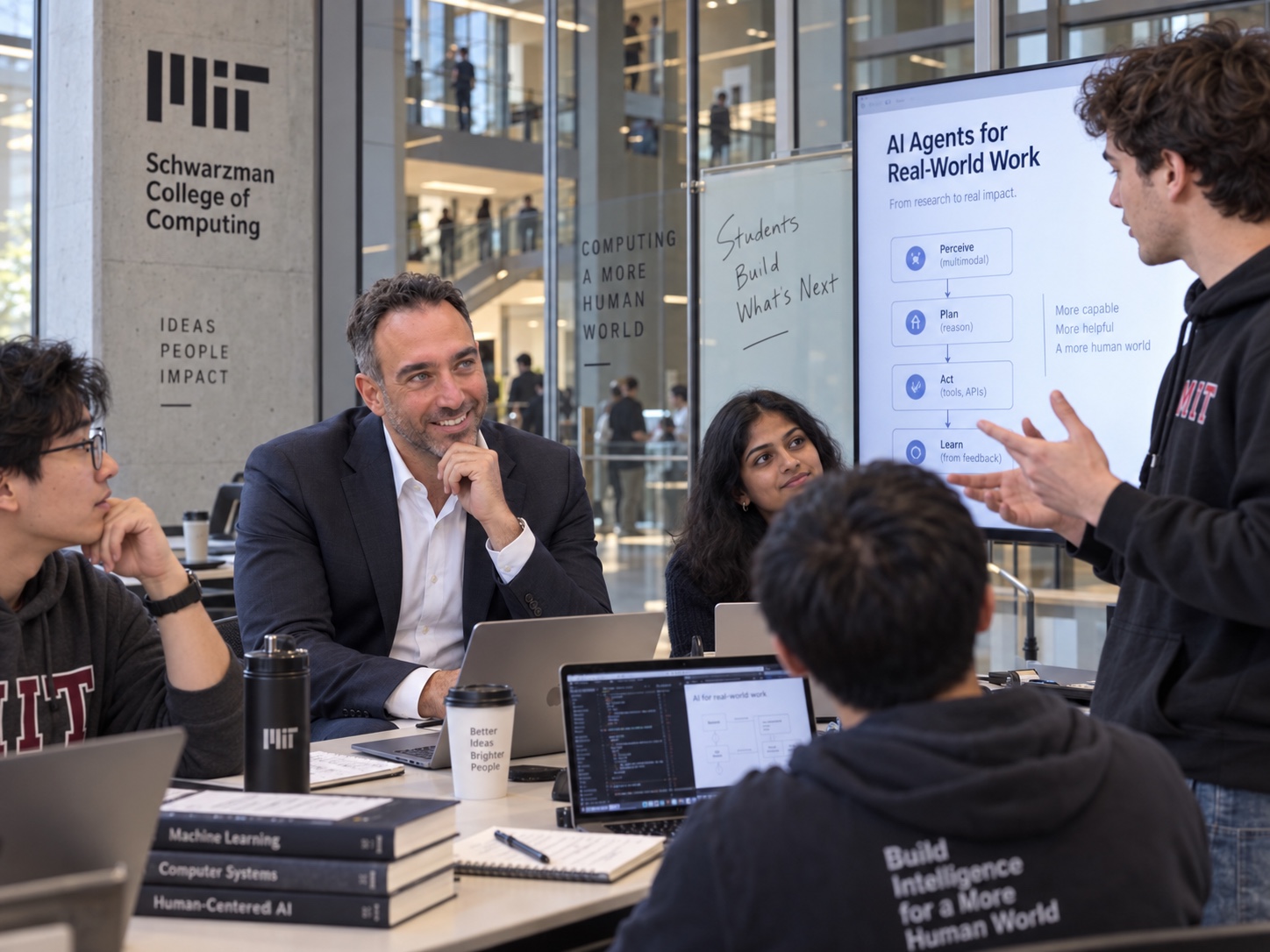
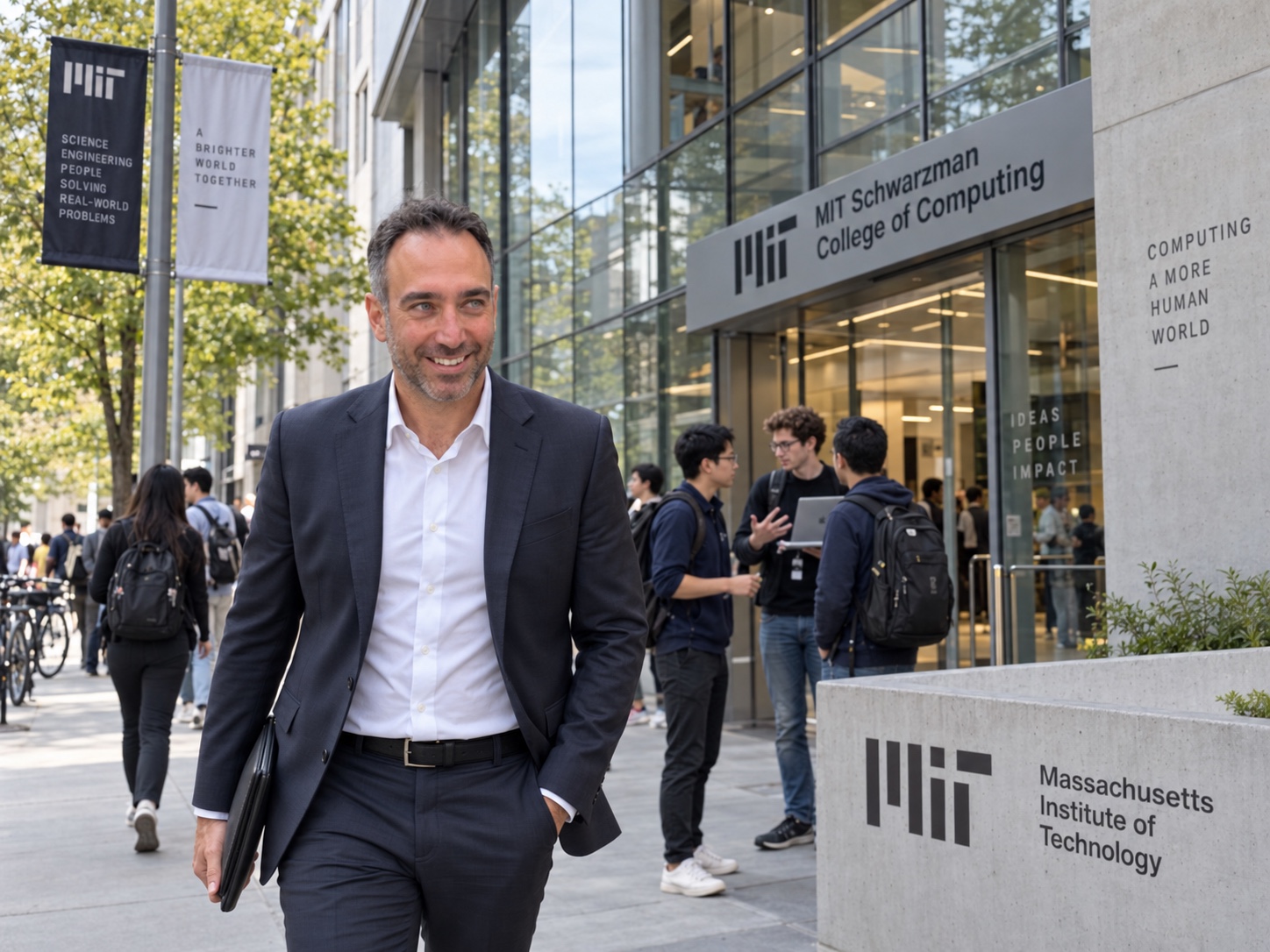
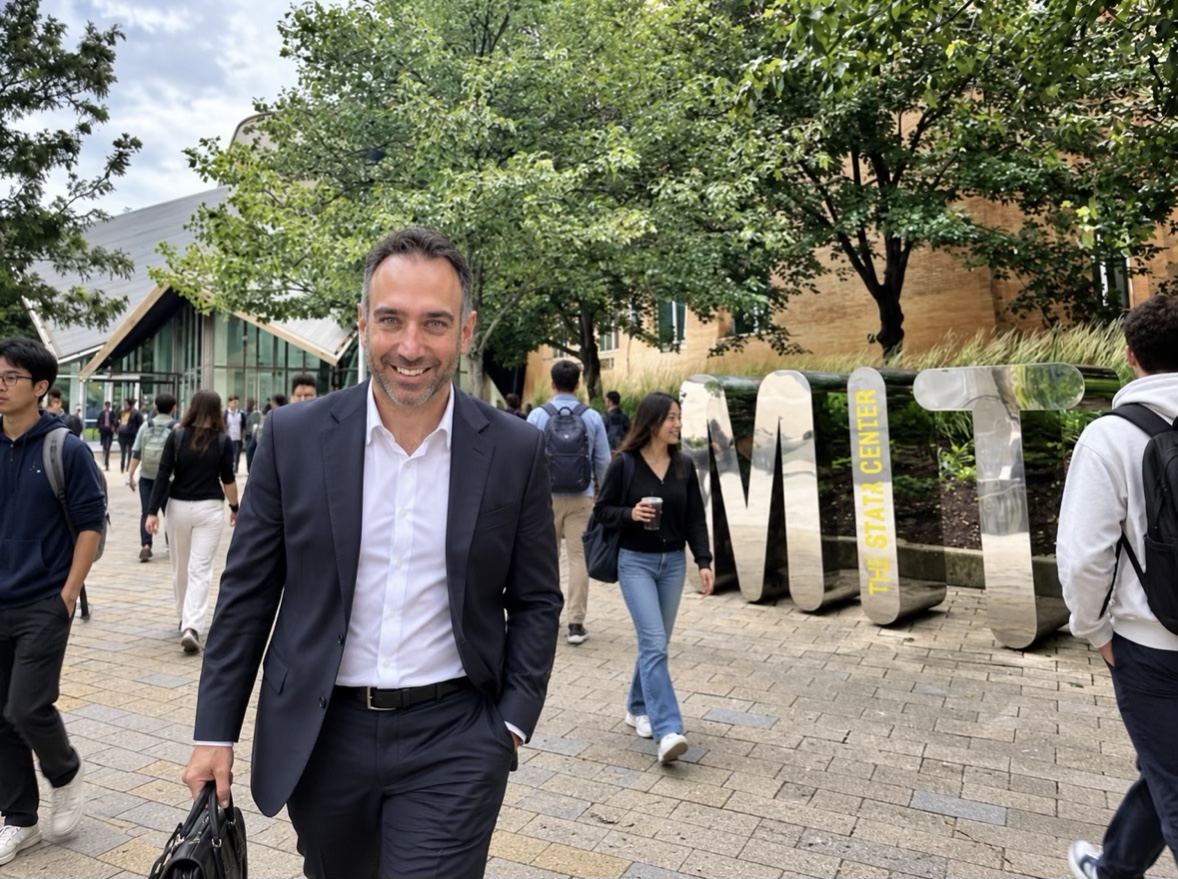
Spend time with people closest to the technical and human reality.
Use questions to uncover what a polished narrative leaves unresolved.
Connect what was heard to market structure, timing, risk, and durable advantage.
AI-assisted editorial imagery inspired by Amad’s MIT visit and investment work.
Selected investments
A small selection spanning technology, consumer experience, cloud infrastructure, healthcare, and enterprise AI. The revealing part is not only what each company became, but the question it made possible to ask before the answer was obvious.
Mobility · Technology
The questionCould urban mobility become an on-demand network rather than a product people had to own?
A new layer of urban infrastructure built around convenience, network effects, and changing consumer behavior.
Cloud · Data
The questionCould the cloud transform not only where data lives, but how organizations share it and build around it?
A foundational platform for a world in which data becomes central to how every modern organization operates.
Early Angel Investment · Consumer Technology
The questionCould the camera become a new language rather than merely a way to record the past?
An early conviction in visual communication, identity, and the shift from permanent feeds toward more immediate forms of expression.
Consumer · Hospitality
The questionCould quality, ritual, and hospitality turn an everyday commodity into a category-defining experience?
A category-defining brand that paired uncompromising product quality with a distinctly thoughtful customer experience.
Healthcare · Biotechnology
The questionCould precision engineering make consequential treatment less invasive without making it less ambitious?
A meaningful advance in non-invasive treatment built at the intersection of clinical need, engineering, and precision.
Seed Stage · Enterprise AI
The questionCould AI become a trusted operating layer for the most demanding forms of knowledge work?
An early investment in AI-powered workflows for rigorous knowledge work—helping financial professionals navigate complex information and make better-informed decisions.
Decision discipline
What would change my mind?
Every investment thesis should be falsifiable. Naming the evidence that would weaken conviction is not hesitation; it is how an investor protects judgment from momentum, status, and attachment.
The story becomes more sophisticated while customer behavior, technical progress, or market learning remains static.
The product may be compelling, but the path to adoption depends on access, behavior change, or economics the company has not earned.
New information is defended against rather than absorbed, and conviction hardens into attachment to the original plan.
Incentives, governance, reliability, or culture weaken as the organization grows and the consequences of failure increase.
Capital allocation
From company judgment to portfolio judgment
Selecting a strong company is only part of the work. Portfolio construction asks how conviction, ownership, risk, and time fit together across a finite pool of capital.
Meaningful ownership should follow differentiated insight—not the pressure to appear active across every compelling market.
A large outcome matters only if the company can survive the sequence of product, distribution, talent, financing, and governance decisions required to reach it.
Risk cannot be removed from early-stage investing. It can be named, staged, tested, and matched to the evidence available at each moment.
A portfolio should express distinct, falsifiable convictions—not a collection of borrowed narratives that all depend on the same consensus being right.
Case study
Blue Bottle Coffee
Blue Bottle stood out because it understood something larger than coffee. It recognized that quality, ritual, design, and hospitality could combine to create a brand people would actively choose to make part of their lives.
The investment reflected a belief that exceptional consumer companies are built through coherence. The product, physical environment, service, and visual identity all reinforced the same promise: care in every detail.
That lesson continues to inform how I evaluate founders. The most durable brands do not simply sell something better; they make customers feel the difference—and build trust by delivering that feeling consistently.
“Category-defining companies often begin by turning an ordinary experience into something people value differently.”
Perspectives
Notes on investing
Short previews from an evolving collection of essays about founders, technology, conviction, and the responsibility of investing early.
Why AI—and the path toward AGI—may expand productivity, invention, and company creation on a scale unlike any technological transition before it.
Read the perspectiveWhy the most consequential opportunities may belong to companies building toward deeper reasoning, adaptability, and genuinely intelligent systems.
Read the perspectiveCapital matters, but enduring partnerships are built through trust, empathy, intellectual honesty, and usefulness when the path becomes difficult.
Read the perspectiveAn open conversation
Building what comes next
If you are building at the intersection of deep insight and meaningful impact, I would be glad to learn what you see—and why you believe now is the moment to build it.
Start a Conversation